

Clarko Wuz Here: Interview with Clarko
By Emma Speicher

I first discovered Clarko on the stoop of a hardcore house on a maliciously muggy May evening — a naïve newly-minted grad, burnt out by the music industry and general adulthood. "Stifled" trudged out of a weathered JBL speaker, and just like that, my binary punk mind was shattered. Raw creativity, unfettered, scrambled with the angst of soul-crushing capitalism and self-inflicted realization. The Reno vigilante took my over-easy passion and turned it into an all-out egg punk soufflé.
Clarko emulates a dollop of spicy Dijon mustard — blights of seeded syncopation fermented in refreshing acidic lyricism, seasoned with Clark "Rules" Demeritt's signature secret blend of bona-fide wit. Intense, sharp, and complex.
The famously humble Clark is a charismatic ball of emphatic whimsy and aloofness, attributing his musical personality to his chronic little brotherhood — dubbed "America's Little Brother" by his friend's wife Hilary, and by "Daddy" Jensen of Iron Lung. He largely credits constant bullying and a competitive vying for attention as the architects of his outgoing, approachable personality.
In high school, Clark volunteered at Sound and Fury Records — a half record store, half food co-op — where he was introduced to his "punk dad," Josh Hardy, a scrappy circuit of basement venues, and the Reno music behemoth that is the Holland Project.
"Reno was — is — like ground zero for everything. Going to punk shows here. The reason I got into DEVO was an older Reno punk [Josh Hardy]. I liked 'Gut Feeling' from The Life Aquatic, but I didn't really dive any deeper. Then one day I was sitting with him and he was like, 'You gotta listen to DEVO,' and he sold me his copy of Q: Are We Not Men? It might have been a scummy 'trying to sell me a record' thing. But getting involved with the basement scene at Holland — all of that just kind of exploded my life in a good way. It opened up everything and got me really interested in music in a way I wasn't before."
Soon after, Clark embedded himself in the local basement show circuit, playing in bands like Soda Jerks, Registered Sex Offenders and the Pelvis Wrestlies and throwing shows out of his own house. His basement became a proving ground for some genuinely unique acts:
"One year we had Mom — a garage rock performance artist from the Bay Area — and she was just the most insane thing you'd ever seen. The first time I saw her, she had raw chicken feet that she would throw into the audience. I'd hear stories that she would shit on an Easy-Bake oven and then cook it… so she played in the basement, and during those shows I'd sometimes try to watch but also be running around doing other stuff. She filled a Super Soaker with what I'm led to believe — and I don't know if it's 100% true — was a mix of milk and piss, and she would squirt people with it. Then it broke and spilled all over the floor."
Whether the two-time air guitar champion was bleaching his basement floors or haunting the halls of the Holland Project as its resident music director, organizing live music has been the throughline of his life.
"The idea of Reno at the time — and it's still kind of that way — was that it was small enough where anybody could do anything. It made it so I could start booking shows and be that person, as long as I had the drive to do it. Even if your shows aren't great, somebody's usually there to show you a good time. People would always stay at the house, and I love that. I loved hosting people, having them there, going out and having a great time after the show."
Clark's friendship with Shannon and the Clams is woven through his life as both dear friend and tour manager. He first met the band through regular trips to Oakland — a city he credits with shaping him as much as Seattle and Reno ever did — falling into what he describes as "another group of best friends" and the broader web of West Coast interconnection.
"I'd go to Oakland like once or twice a month, and that's where I met Shannon and the Clams and pretty much another group of best friends. The interconnections between punk over the whole West Coast are really beautiful."
Living in Seattle, he was "on tour more than [he] was in Seattle," disappearing for months at a time as their tour manager. And back in Reno, the Clams would crash at his place — including one stop where his roommates had scattered mothballs to high heaven around the house, giving Shannon such a bad reaction she had to breathe through an open window just to survive the night. On that same tour stop, the van got broken into — and their drummer Ian ate an entire box of donuts.
The years on the road with the Clams shaped more than just his chops for the music industry – they informed the philosophy he'd build his project around: The Clarko Rules…
"Rule number one is always have fun. If you're not having fun anymore, let me know, and we can either fix it — or if you want to leave, that's fine. And rule two is: do what I tell you. At one point, if I go, 'Hey, we need to play it this way,' you should play it this way."
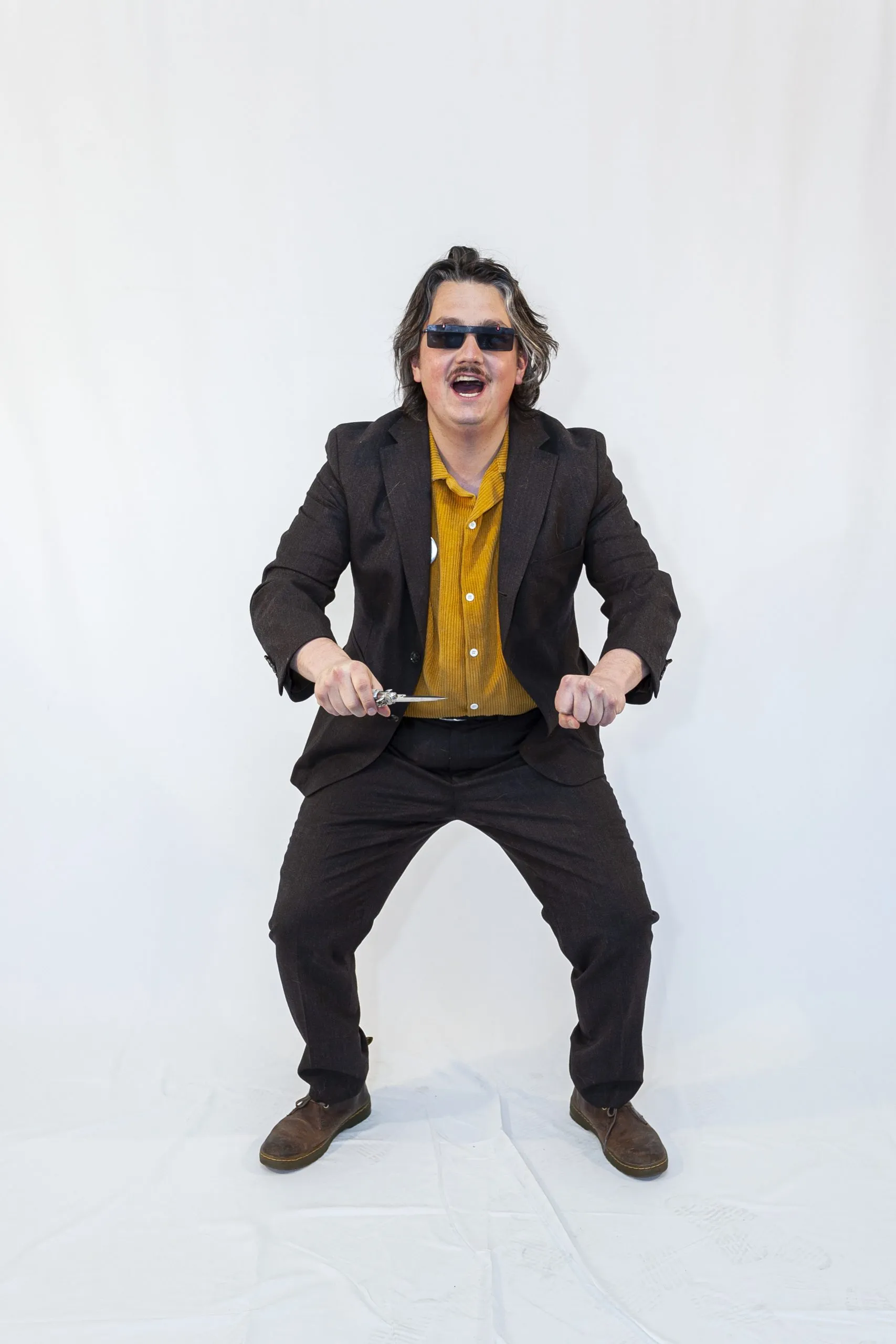
Autonomy and joy at the foundation, Clark's Rules share the same ethos that he applies to his own life. Clark left some characteristically grounded advice for anyone grinding themselves into the dirt over music or in life:
"If it's not fun, take a break — and if it's something you don't have to do, don't burn yourself out on it, because you're going to hate it. Unless it's for survival. Like burning out on music — just set it down for a little bit until you want to do it and it's fun again."
It's a principle Clark lives.
Clark is always on his toes — all ten of them, tattooed with "Clarko Rules" as proof. A new album is in the works, and whatever's fermenting in that brain of his, Reno will be the first to taste it.
Keep your ears peeled.
